Flexistone Panels
Real stone, taken down to a few millimetres and made to bend.
Quarried stone split thin enough to roll: light to carry, flexible enough to follow a curve, and fixed with tile adhesive rather than wet trades. Each series below is one texture in several colourways.
Features
Real stoneSplit from natural stone, not printed
2 to 5mm profileA fraction of the weight of slab
FlexibleWraps columns and curved joinery
Simple installAdhesive onto any flat substrate
Wet-area ratedBathrooms, laundries, splashbacks
Four sizes60 × 120 up to 120 × 300cm
Held in AustraliaStocked here, not indented
Common questions
Flexible stone veneer, answered.
What is flexible stone veneer?
A sheet of real quarried stone, split thin and bonded to a flexible backing. It keeps the face, grain and colour of the stone it came from, but it is thin enough to bend around a column or a curved return, and light enough for one person to carry up a stair.
How thick are KOJO Flexistone panels?
Strata and Marble panels are 2 mm; Weave and Terra panels are 5 mm. Either way they are thin and light, which is why they can go over plasterboard, over existing tile and onto upper floors without the structural work a stone slab would need.
How are the panels fixed to a wall?
With tile adhesive onto a flat substrate, so there are no wet trades and no cutting yard on site.
Where can I see the panels in person?
At our showroom and warehouse at Unit 26/428 Old Geelong Rd, Hoppers Crossing VIC 3029, in Melbourne's west. Everything we list is held there, so call ahead on +61 406 480 730 and we will have the surfaces out ready.
Do you send samples?
Yes. Samples are free within Australia. Ask for a sample pack through the contact page, or email sales@kojoliving.com.au.
Which series should I look at?
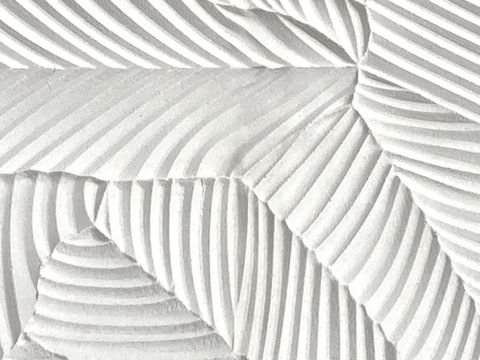
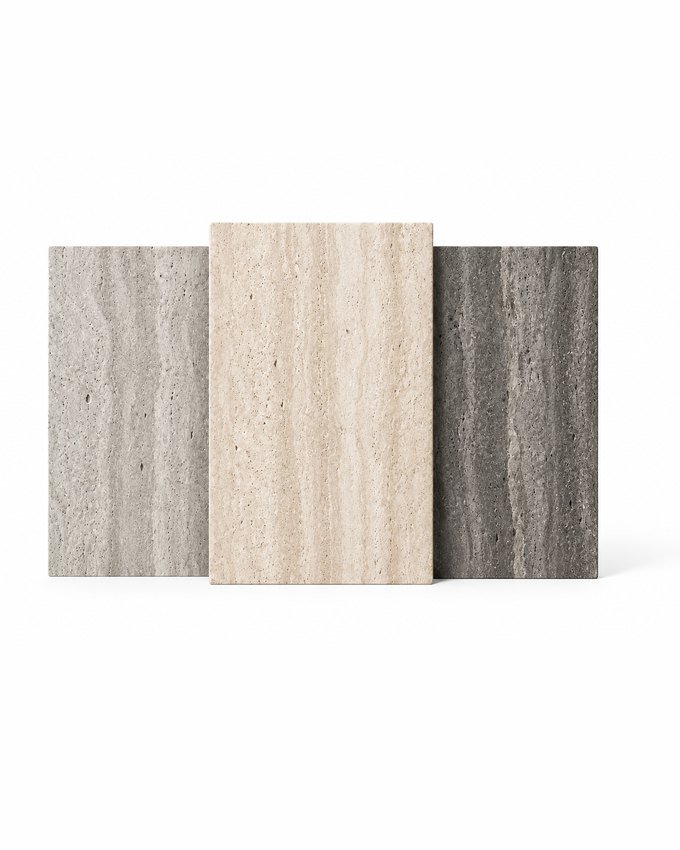
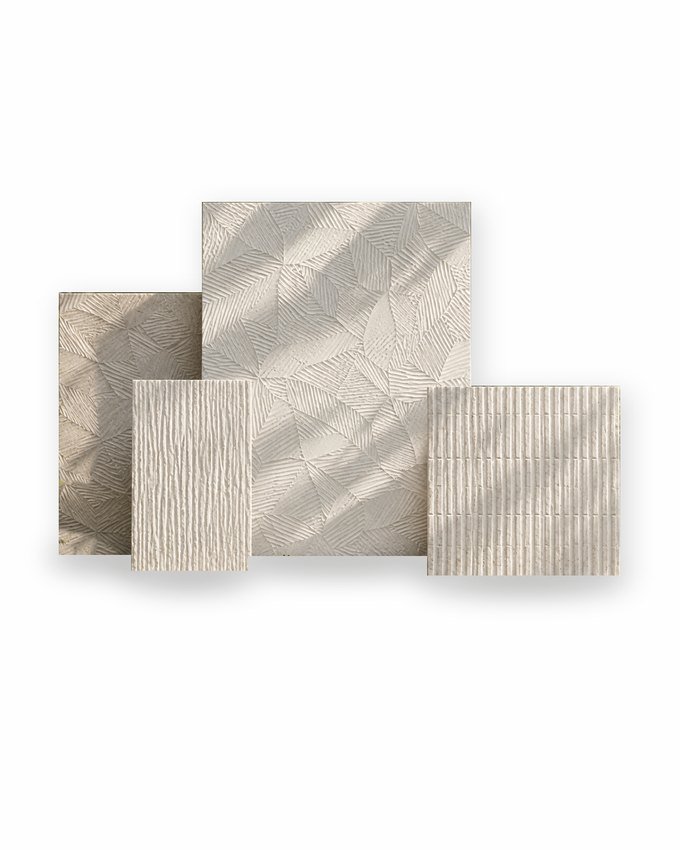
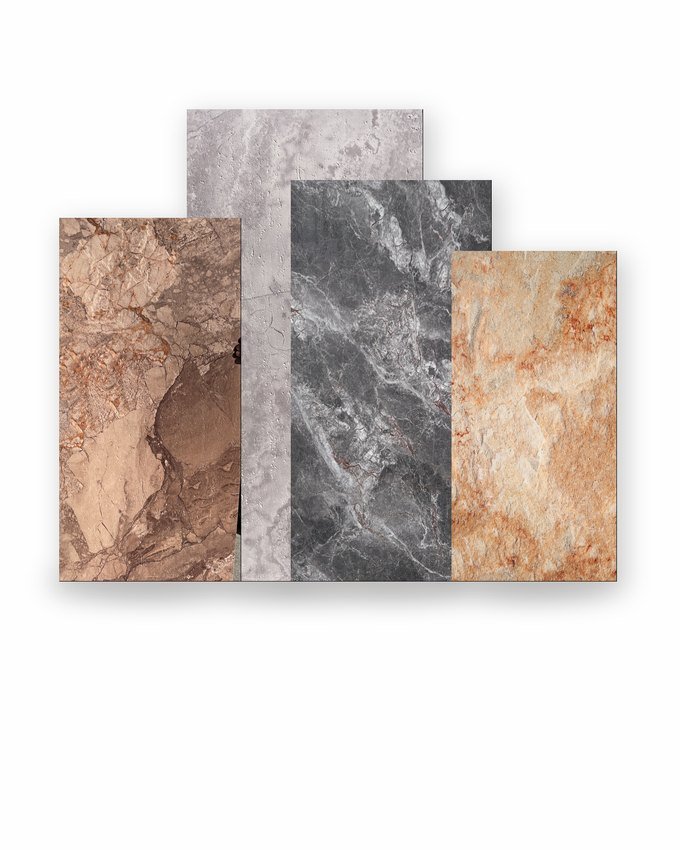
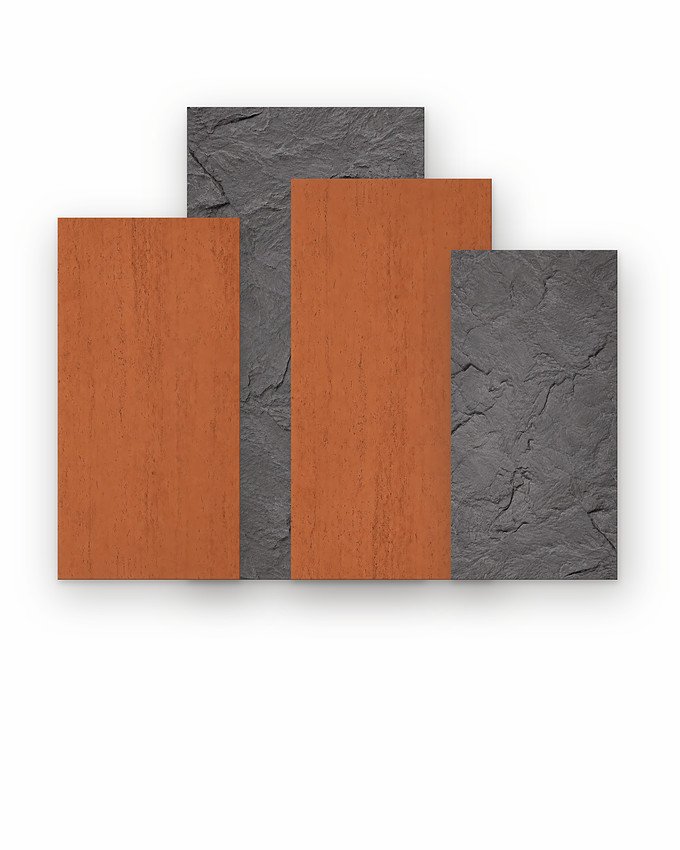
Strata is layered and linear, in forty colourways. Weave is a carved relief, in four designs. Marble is veined, in twenty-six colourways. Terra is earthy, in terracotta and charcoal slate. If you tell us the room and the light it gets, we will narrow it down for you.
Why flexible stone
Real stone, without the weight or the wet trades.
A finish that loads a wall like a finish
Because the sheet is measured in millimetres rather than centimetres, it sits on a wall the way a tile or a panel does, not the way a slab does. That changes what is possible on plasterboard, over existing tile, and on upper floors where slab weight would otherwise mean structural work.
It bends where the building bends
The sheet takes a curve without cracking, so columns, bulkheads, curved reception fronts and rounded returns can carry the same surface as the flat wall beside them. The material follows the architecture instead of asking the architecture to square itself off.
One surface, wall to wall
Large sheets mean very few joins, and every colourway inside a series shares the same texture. A scheme can move from a pale wall to a dark one, or from a flat run onto a curve, without the surface changing character halfway through.